Back

Heavier NFT lettuce in all three varieties at Colorado State University

CSU Spur, Denver, USA | Nov-Dec 2024
NFT channels
Coir plugs
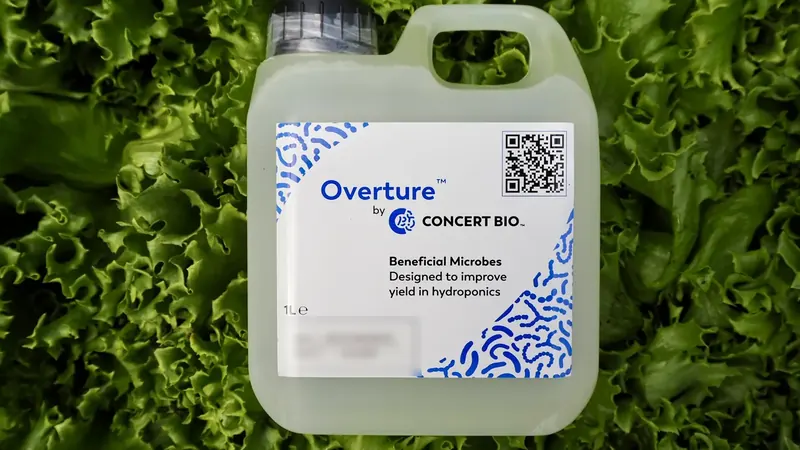
Overture® A product
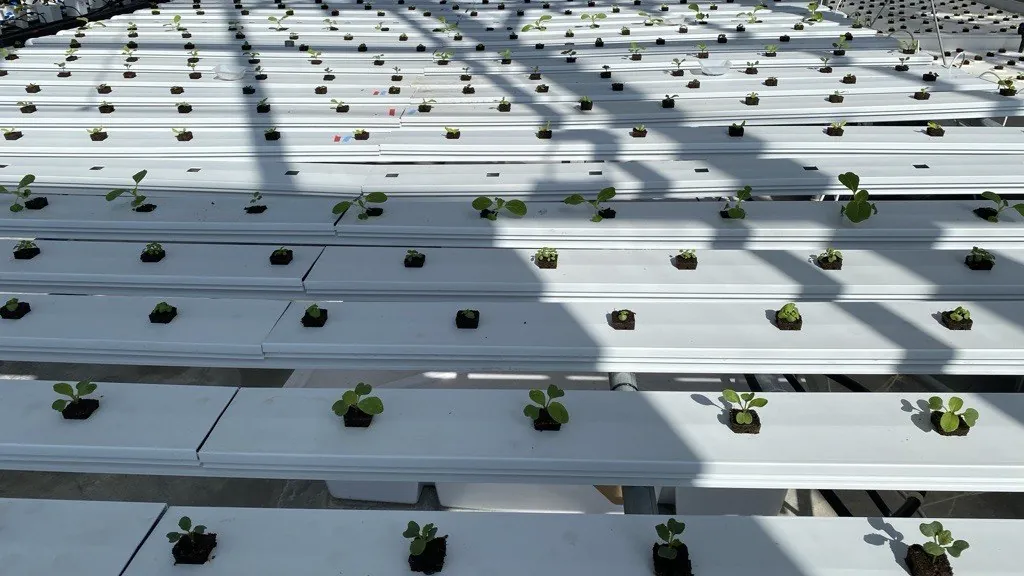
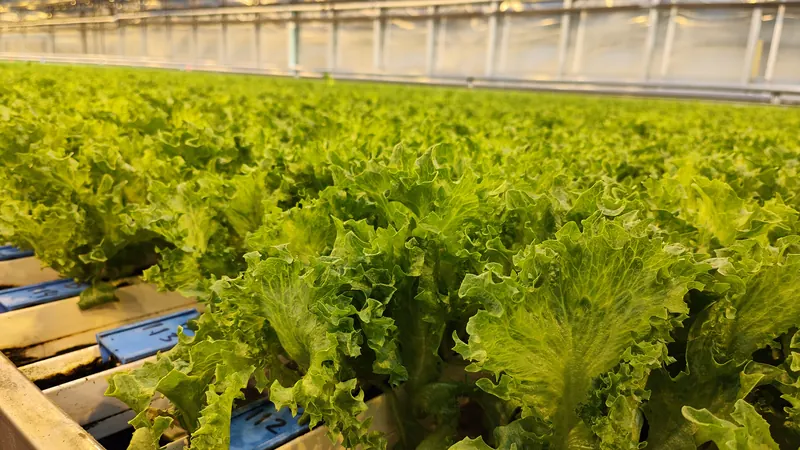
Young lettuce plants in NFT channels at the CSU Spur greenhouse in Denver
Leafy greens
Colorado State University logo

+24%

NFT head weight
Overture® A vs untreated plants, three lettuce varieties grown in NFT (model estimate)

All 3

Varieties heavier in NFT
Gladius +34%, Rex +22% and Salanova Red Oakleaf +20% in NFT (median head weight)

180

Plants weighed
Lettuce grown in NFT, weighed individually by CSU staff

Trial Summary

Colorado State University ran this winter trial at CSU Spur, its applied research greenhouse in Denver, in November and December 2024. Three Rijk Zwaan lettuce varieties were grown in NFT channels, from coir plugs.

Overture® A was sprayed onto the seed at sowing and onto the leaves about 12 days later. It was tested within a wider CSU experiment, with half of the plants in each group inoculated and half left untreated. CSU staff weighed every plant individually at harvest.
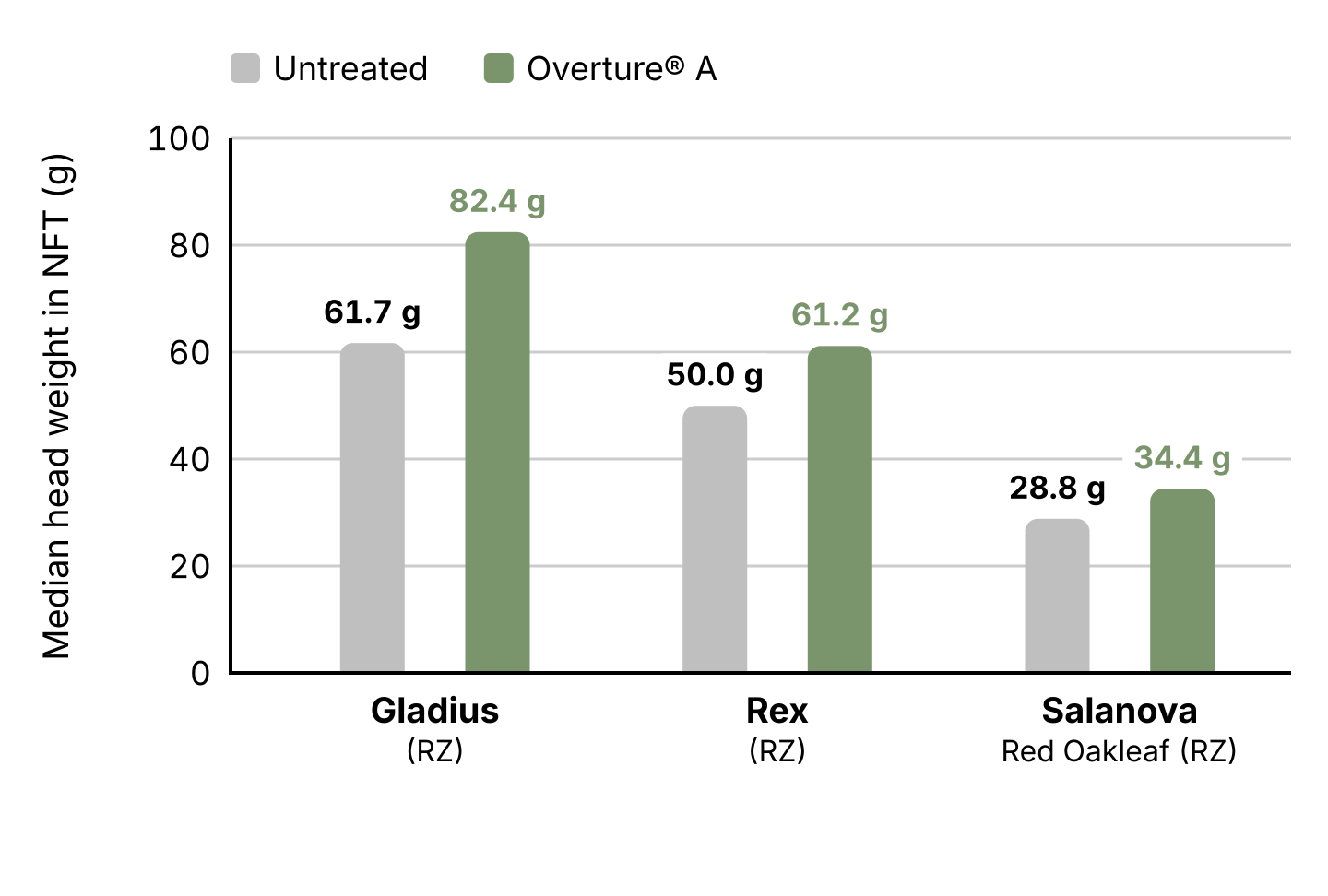
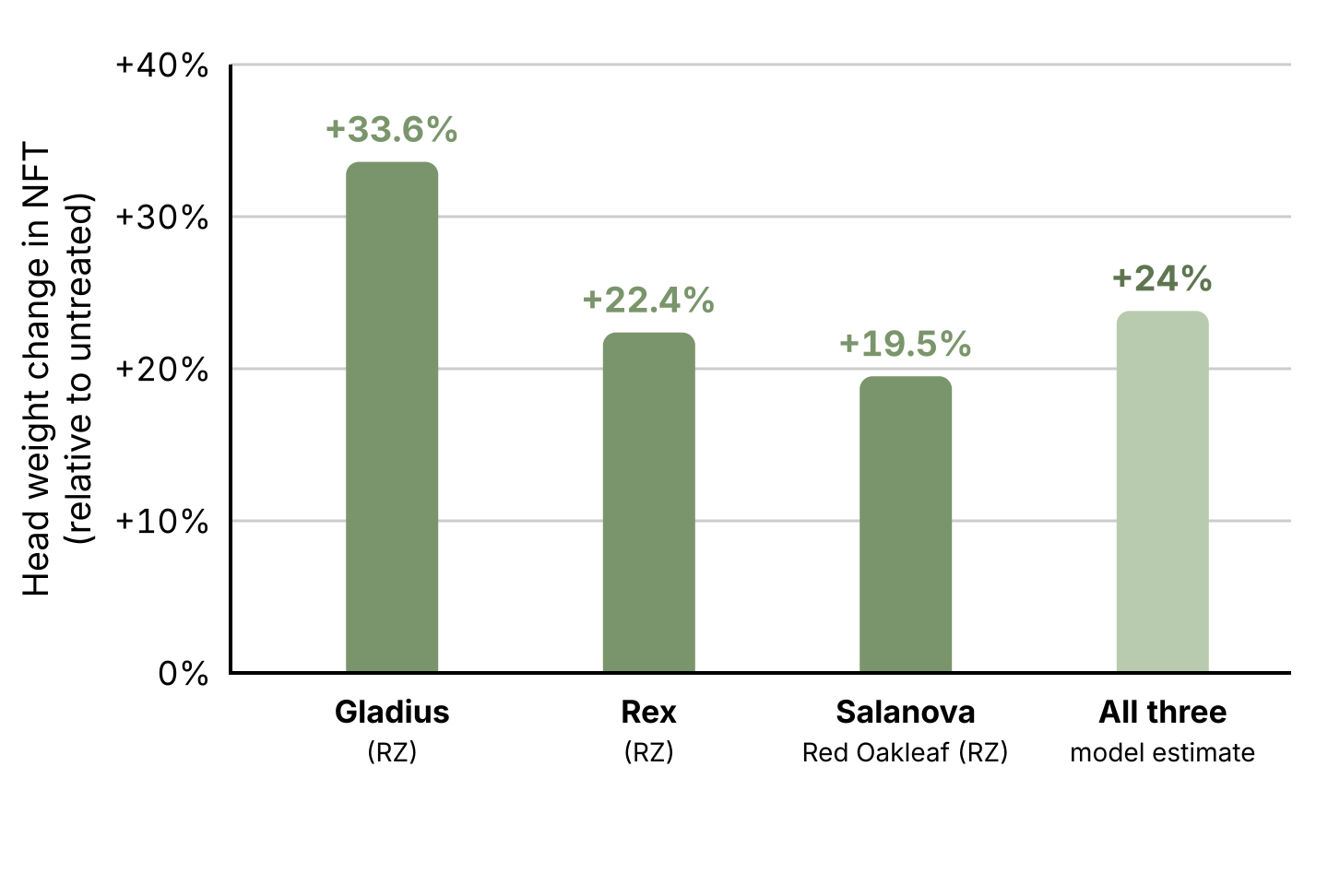
Figure 1
Median lettuce head weight in NFT: Gladius (RZ) 82.4 g with Overture A vs 61.7 g untreated, Rex (RZ) 61.2 vs 50.0 g, Salanova Red Oakleaf (RZ) 34.4 vs 28.8 g
Figure 2
Change in median head weight with Overture A in NFT: Gladius +33.6%, Rex +22.4%, Salanova Red Oakleaf +19.5%; all three varieties +24% (model estimate)
Trial details
Location
Denver, Colorado, USA
Trial period
Nov-Dec 2024
Crop
Lettuce
Variety
Gladius, Rex, Salanova Red Oakleaf (RZ)
System
NFT
Substrate
Coir
Product
Overture® A
Application method
Seed + foliar spray
Application frequency
Two applications only

Conclusions

In NFT, Overture® A produced heavier lettuce heads in all three varieties: +34% for Gladius, +22% for Rex and +20% for Salanova Red Oakleaf (median head weight). A statistical model across the three varieties puts the increase at +24%. Treated plants were heavier in 10 of the 11 groups of the wider experiment.

The heads were small, as expected for a winter crop under low light, and the gain came from just two applications: one onto the seed and one onto the leaves.

READ ON

More case studies

Ready to take control of your plant microbiome?

Get in touch to get started.

Backed by real world data

Trusted by growers

Science-led, grower-focused

Get access

Thank you! Your submission has been received!
Oops! Something went wrong while submitting the form.