+4.7% more cucumbers at Green Diamonds


+4.7%
+6.4%
+9.2%
Trial Summary
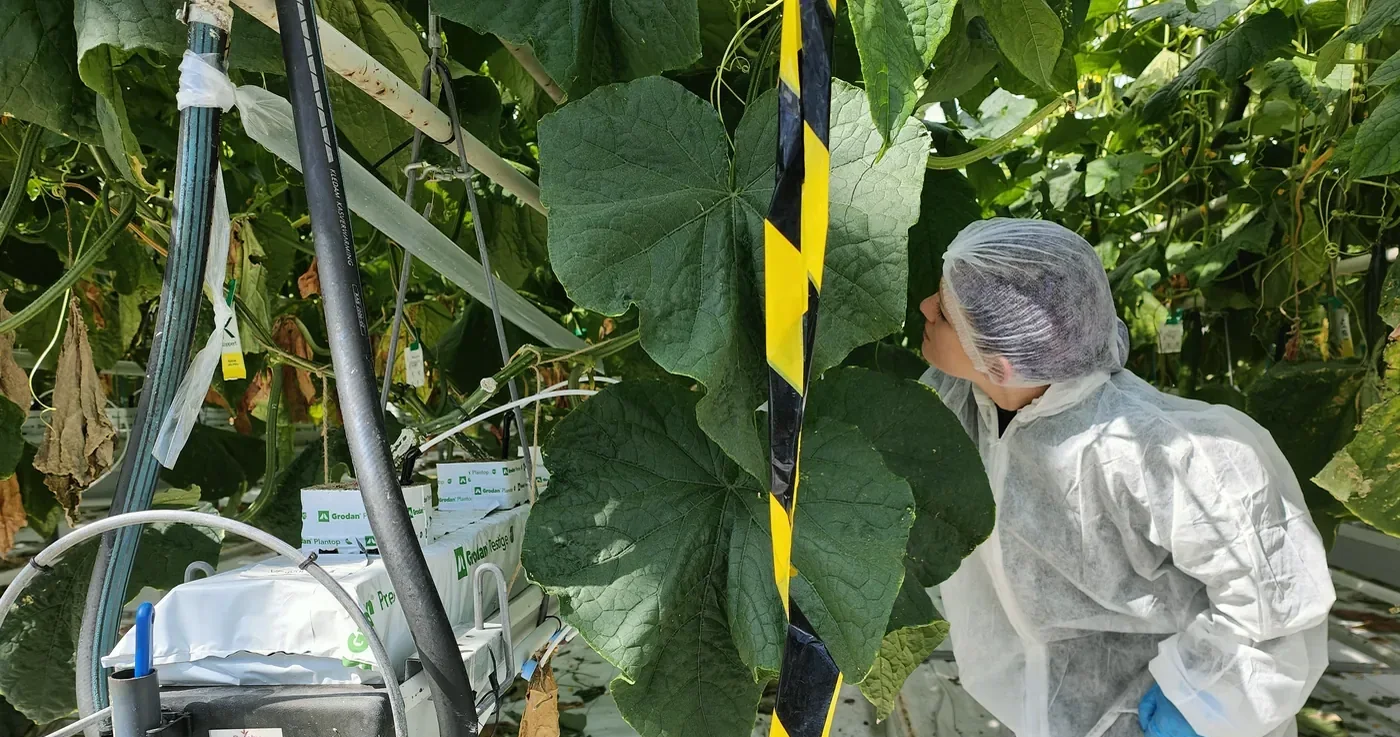
Green Diamonds is the cucumber brand of Growers United, one of the largest grower conglomerates in the Netherlands. It brings together several growers and multiple sites across the country. At one of these locations, in Kwintsheul in the Dutch Westland, Green Diamonds ran two commercial trials of Overture® A. Both directly compared treated and untreated rows in the same greenhouse over the same weeks.
In both trials, Overture® A was applied by injecting it into the irrigation, the same way the grower already applied other inputs. This used existing equipment, which meant minimal work for the grower.
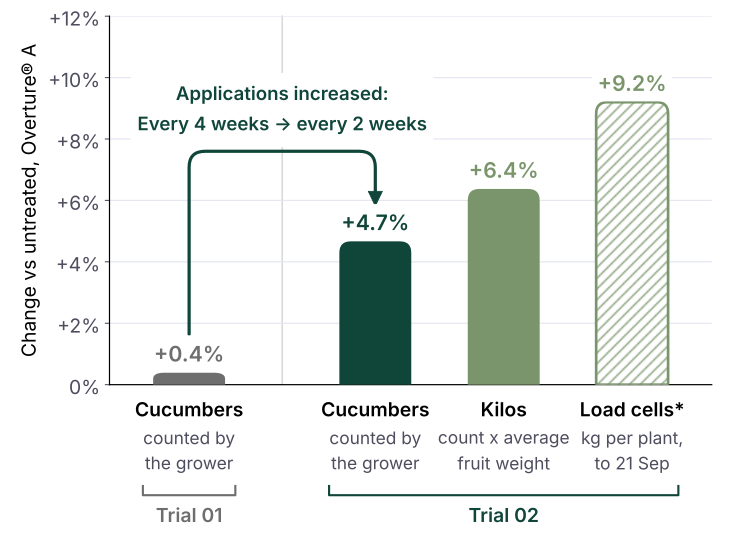
In the first trial, application was every four weeks. This improved the number of cucumbers only marginally, by +0.4%. In the second trial, we doubled the frequency of application to every two weeks, nine applications across the crop. This substantially improved the performance of Overture® A, increasing cucumber pieces by +4.7% vs untreated plants. The cucumbers were also slightly heavier, meaning total kilos improved by +6.4%.
Alongside the grower's weekly count, load cells from Quantified were installed. Two sensors monitored both treated and untreated plants, measuring weight every 5 minutes. This gave a second, independent measurement of the effect of Overture® A. It also let us measure vegetative, leaf and cucumber kilos.


Conclusions
Overture® A increased cucumber yield at Green Diamonds by +6.4% by weight and +4.7% by number of fruit. Most of the gain came from more cucumbers, not bigger cucumbers. Average fruit weight increased by only +1.6% when a sample of fruit were all individually weighed. The grower's own grading machine also saw no meaningful change during two grading measurements.
The load cells showed the same pattern and a larger difference, +9.2% by 21 September. They also showed how and when the extra yield was created. Plants with Overture® A were heavier by late July, and were producing more leaves. The extra cucumbers followed from August. This fits with how Overture® A works, through the plant hormones auxin and cytokinin, which drive root and shoot growth.
How often the product goes in matters when it is dosed through the irrigation. Applied every four weeks in the first trial, Overture® A made no clear difference; applied every two weeks in the second, it gave +4.7% more cucumbers. Each application used the same amount of product, so the second crop also received about twice as much in total. Where growers inject Overture® A into the irrigation, we now recommend applying it every two weeks.
With special thanks to Horti-Tech, who made this trial possible, installed the Quantified sensors and collected much of the data presented here.